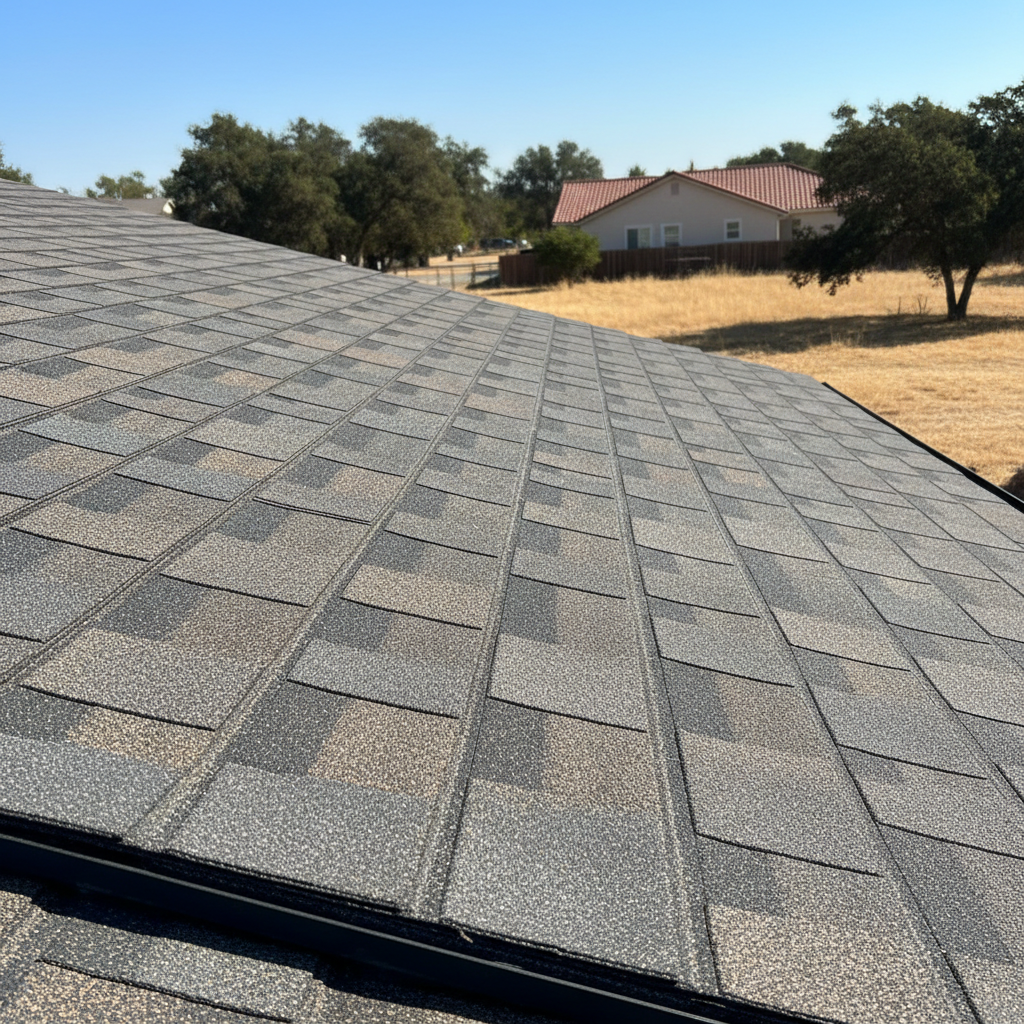
Alright, let's talk about asphalt shingles. If you live in Elk Grove, chances are you've got 'em on your roof, or you're thinking about getting 'em. They're popular for a reason, but that doesn't mean you don't have questions. I get asked a lot of the same things, so I figured I'd just lay it all out here. No fluff, just straight answers from someone who's been up on these roofs for years.
How long do asphalt shingles really last in our climate?
This is probably the number one question I hear. The truth is, it depends on a few things, but generally, you're looking at 20 to 30 years for a standard architectural shingle. Three-tab shingles, which you don't see as much anymore, might be closer to 15-20. Here in Elk Grove, our hot, dry summers and occasional heavy winter rains can be tough on roofs. The intense UV exposure from that California sun really bakes the granules right off your shingles over time. Good ventilation in your attic makes a huge difference too; if your attic is an oven, it's cooking your shingles from underneath, shortening their lifespan. Proper installation is also key – if it's not done right, even the best shingles won't last their full term.
What's the deal with those black streaks on my roof? Is it mold?
Those black streaks are almost always algae, specifically a type called Gloeocapsa magma. It's not mold, but it's not pretty, and it can hold moisture, which isn't great for your roof long-term. It thrives in humid conditions and often shows up on the north-facing sides of roofs or under trees where it stays damp. While it won't immediately destroy your roof, it can slowly degrade the granules, which protect your shingles from UV rays. You can clean it, but be careful. Pressure washing can strip granules right off, doing more harm than good. There are specific roof cleaning solutions, or you can get shingles with copper granules that resist algae growth. We see a lot of it in older neighborhoods with mature trees, like some parts of Laguna Creek.
Do I really need to get my roof inspected every year?
Look, I'm a roofer, so you might think I'd say 'yes, absolutely!' But honestly, for most asphalt shingle roofs that are less than 10-15 years old and haven't had any known issues, a yearly inspection by a professional might be overkill. What I *do* recommend is that you, the homeowner, take a look from the ground with binoculars once or twice a year, especially after any major storms. Look for missing shingles, lifted edges, excessive granule loss in your gutters, or anything that just looks 'off.' If you see something, then call us. For older roofs, or if you've had issues in the past, then yes, a professional check-up every year or two is a smart move. It's about catching small problems before they become big, expensive ones.
My neighbor just got a new roof. Why is mine curling and theirs isn't?
Shingle curling can happen for a few reasons. It's often a sign of aging – as shingles get old, they dry out, lose their elasticity, and start to curl up at the edges or cup in the middle. Poor ventilation in the attic is another big culprit; excessive heat buildup causes the shingles to age prematurely and warp. Sometimes, it's a manufacturing defect, but that's less common with modern shingles. If your neighbor's roof is newer, or if they used a higher-quality shingle, or if their attic ventilation is better, their roof might just be holding up better. It's a clear sign your roof is nearing the end of its life, and it's time to start thinking about replacement.
What's the difference between 3-tab and architectural shingles?
This is an easy one. Three-tab shingles are flat, single-layer shingles with cutouts that make them look like three separate tabs. They're generally thinner, less durable, and have a shorter lifespan – usually 15-20 years. Architectural shingles, also called laminate or dimensional shingles, are much thicker and have multiple layers bonded together. They create a more textured, dimensional look, often mimicking the appearance of wood shakes or natural slate. They're heavier, more wind-resistant, and typically come with longer warranties, often 30 years or more. Pretty much everyone goes with architectural shingles these days; they just offer better protection and curb appeal for not much more money upfront.
Can I just repair a few damaged shingles, or do I need a whole new roof?
It depends on the extent of the damage and the age of your roof. If you've got a few missing or damaged shingles from a wind storm, and the rest of your roof is in good shape, then yes, a repair is usually possible and makes sense. We can often match the color pretty closely, though new shingles will always look a bit different from weathered ones. However, if your roof is old, say 20+ years, and you're seeing widespread granule loss, curling, or brittleness, then replacing a few shingles is like putting a band-aid on a much bigger problem. The existing shingles might be too brittle to work with without causing more damage, and you'd just be delaying the inevitable. I'll always give you an honest assessment of whether a repair is a good investment or if it's time to consider a full replacement. That's what we do at Paramount Roofing Solutions – give you the real deal.
How does the California heat affect my asphalt shingle roof?
Our Elk Grove summers are no joke, right? Those long stretches of 100+ degree days are brutal on everything, and your roof is no exception. The intense heat and UV radiation are the primary culprits for granule loss. Those little ceramic granules on top of your shingles are there to reflect sunlight and protect the asphalt layer underneath. As they get baked off, the asphalt is exposed to the sun, which causes it to dry out, become brittle, and eventually crack. This accelerates the aging process significantly. That's why good attic ventilation is so important here – it helps dissipate that heat, keeping your attic cooler and extending the life of your shingles. Also, lighter-colored shingles can reflect more sunlight than darker ones, potentially keeping the roof surface a bit cooler.